

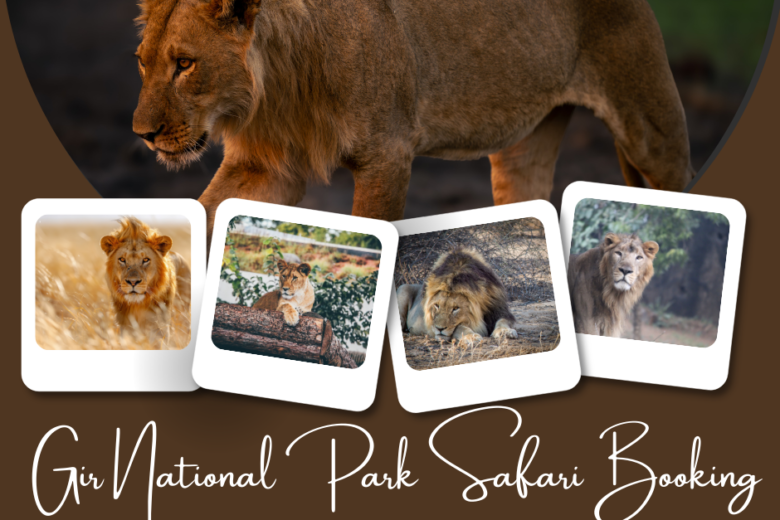
Asiatic Lion: A Conservation Success Story of Gir National Park
The Asiatic lion (Panthera leo persica) represents one of the greatest wildlife conservation success stories worldwide, with Gir National Park in Gujarat, India, as its epicenter. Once teetering on extinction’s edge, the Asiatic lion population has rebounded through decades of focused lion conservation efforts, scientific management, strict anti-poaching measures, and community participation. Today, Gir National Park shines as a global symbol of hope for endangered species recovery.
The Asiatic Lion: An Endangered Species on the Brink
Historically, Asiatic lions roamed vast Southwest Asian and Indian subcontinent territories, from the Middle East to eastern India. By the late 19th and early 20th centuries, relentless hunting, habitat destruction, and human encroachment drove them to near-extinction.
By 1900, fewer than 20 Asiatic lions survived, confined to the Gir forest. Colonial rulers and local elites’ unregulated shikar (hunting) decimated prides. The visionary Nawab of Junagadh responded by banning lion hunts, launching organized lion conservation.
Gir National Park: The Last Natural Habitat for Asiatic Lions
Gir National Park and Wildlife Sanctuary—the world’s only wild home for Asiatic lions—spans dry deciduous forests, grasslands, scrublands, and riverine ecosystems. This wildlife sanctuary provides ideal conditions for hunting, breeding, and survival.
A robust prey base sustains lions:
Chital (spotted deer)
Sambar deer
Nilgai (blue bull)
Wild boar
This abundance minimizes human-lion conflict. Gir’s biodiversity hotspot also hosts leopards, hyenas, jackals, sloth bears, and 300+ bird species, fostering a balanced ecosystem.
Government-Led Lion Conservation Initiatives
Gujarat Forest Department’s long-term programs drive the Asiatic lion recovery. Key strategies include:
Rigorous anti-poaching measures with 24/7 patrols and GPS tracking
Lion census monitoring via camera traps, drones, and AI
Habitat restoration through grassland revival and water augmentation
Regulated eco-tourism generating ₹50+ crore annually
Veterinary care and disease surveillance
Biennial lion censuses track growth: from 674 in 2020 to over 750 in 2025, proving sustainable Asiatic lion population expansion.
Community Participation and Human-Lion Conflict Resolution
Maldhari pastoralists, Gir’s traditional residents, were pivotal. Early human-lion conflict from livestock predation led to retaliatory killings. Since the 1970s, voluntary relocation of 1,000+ families—with compensation, alternative lands, and eco-tourism training—transformed dynamics.
Today, “lion guardians” use apps to monitor prides and report issues. Compensation schemes (₹15,000–₹50,000 per incident) cut conflicts by 70%. Locals now serve as forest custodians, proving community-based conservation’s power.
Steady Growth of the Asiatic Lion Population
From <20 in 1900, the Asiatic lion population reached 411 (2010), 523 (2015), and 750+ today. About 48% roam beyond Gir’s core into satellite areas like Mitiyala Sanctuary, easing overcrowding and boosting genetic diversity.
Global Significance of the Gir National Park Model
The Gir National Park approach is a blueprint for large carnivore conservation, influencing tiger projects and snow leopard efforts. Studied by IUCN and WWF, it highlights:
Endangered species recovery through policy like Project Lion 2020
Community-based conservation
Habitat protection and science-driven management
UNESCO-recognized aspirations elevate its worldwide impact.
Ongoing Challenges and Future Conservation Needs
Threats persist:
Disease outbreaks (e.g., 2018 canine distemper killed 23 lions)
Habitat fragmentation from urbanization
Climate change water scarcity
Single-population vulnerability
Project Lion pushes new habitats in Kutch, Rajasthan, and Madhya Pradesh via soft releases. Advanced habitat restoration, awareness, and monitoring are critical.
Conclusion: A Symbol of Hope and Resilience
The Asiatic lion’s journey in Gir National Park—from near-extinction to thriving—proves dedicated conservation efforts work. Through anti-poaching measures, lion censuses, community harmony, and innovation, Gir reclaims India’s natural pride. This legacy demands global commitment to biodiversity.
If you are planning a vacation to Sasan Gir National Park safari, then you must explore the Asiatic Lion: A Conservation Success Story of Gir National Park blog. For a convenient experience, you can also visit our website www.girlionbooking.com, or direct contact us at +91 8882553752 to book your seats.