

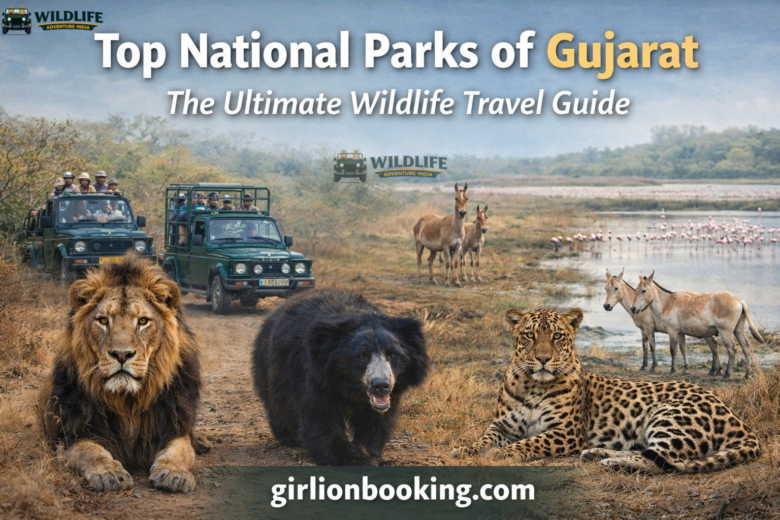
Gujarat is widely regarded as one of India’s most remarkable wildlife destinations, thanks to its impressive ecological diversity and strong conservation record. Stretching from the Arabian Sea coastline to dry inland forests and open grasslands, the state hosts an extraordinary mix of habitats. Within a single region, travellers can witness powerful big cats, rare antelope species, migratory birds, mangrove ecosystems, coral reefs, and desert wildlife. This remarkable range of biodiversity makes Gujarat a unique natural treasure on India’s wildlife map.
The state’s protected areas are not only tourist attractions but also living examples of successful conservation strategies. Gujarat’s forests, coastal belts, and wetlands collectively support rare and endangered species that are increasingly difficult to find elsewhere in Asia. Below is a detailed guide to the top national parks that define wildlife in Gujarat.
1. Gir National Park
Best known for: Asiatic Lion
Gir National Park is globally celebrated as the final stronghold of the Asiatic lion. Historically, these lions roamed across large parts of the Middle East and India, but habitat loss and hunting drastically reduced their numbers. Today, Gir stands as one of the world’s greatest conservation success stories, where careful protection and community involvement have helped the lion population steadily recover.
The park’s terrain is a fascinating blend of dry deciduous forests, acacia scrublands, grassy patches, rocky hills, and seasonal rivers. This mosaic of landscapes creates ideal conditions for both predators and herbivores. While lions are the main attraction, Gir also supports a healthy population of leopards, striped hyenas, jackals, jungle cats, and marsh crocodiles. Herbivores such as chital, sambar deer, nilgai, and wild boar form the prey base that sustains the ecosystem.
Birdwatchers find Gir equally rewarding, with hundreds of resident and migratory bird species recorded within the park. Crested serpent eagles, paradise flycatchers, and painted storks are just a few highlights.
Visitors typically explore Gir through guided jeep safaris. Safaris conducted in the early morning and late afternoon offer the highest likelihood of wildlife sightings, as animals are most active during these cooler hours and frequently gather around water sources to drink. The experience of seeing an Asiatic lion in its natural habitat is both thrilling and unforgettable.
Best time to visit: December to March
2. Blackbuck National Park
Best known for: Blackbucks
Blackbuck National Park at Velavadar showcases a very different yet equally captivating ecosystem — the grasslands of Gujarat. Unlike forested parks, Velavadar’s open plains stretch endlessly under wide skies, offering clear and dramatic wildlife sightings.
The park is especially renowned for its thriving and well-protected population of blackbucks. Male blackbucks are easily identified by their dark brown and white colouration and elegantly spiralled horns. Watching herds sprint gracefully across the grasslands is one of the park’s most memorable experiences. Their speed and agility make them one of India’s most striking antelope species.
Velavadar is also home to predators such as the Indian wolf and striped hyena. The presence of these carnivores reflects the ecological balance maintained within the grassland habitat. Nilgai, foxes, and jungle cats further enrich the wildlife diversity.
During winter months, the park becomes a haven for migratory birds. Large congregations of harriers roost here, creating one of the largest harrier gatherings in the world. The warm glow of dawn and dusk over the open grasslands creates stunning backdrops, making it an ideal setting for breathtaking wildlife photography.
Best time to visit: October to March
3. Marine National Park
Best known for: Marine biodiversity
The Marine National Park in the Gulf of Kutch holds the distinction of being India’s first marine national park. This conservation zone showcases Gujarat’s rich coastal biodiversity and delivers a distinctive nature experience that differs greatly from conventional forest safaris.
The park includes coral reefs, mangrove forests, mudflats, and numerous small islands scattered across the gulf. One of its most fascinating features is the opportunity to observe marine life during low tide. As the water recedes, visitors can witness starfish, sea anemones, crabs, octopuses, and vibrant coral formations up close.
Mangrove ecosystems play a vital role in maintaining coastal stability and serving as breeding grounds for fish and crustaceans. The waters of the park also occasionally reveal dolphins swimming offshore, adding to the region’s charm.
This marine reserve serves not only as a tourism site but also as an essential research zone for scientists studying coral health and coastal biodiversity. Exploring the Marine National Park provides insight into the delicate balance of ocean ecosystems and reinforces the importance of marine conservation.
Best time to visit: October to February
4. Vansda National Park
Best known for: Lush forest landscapes
Vansda National Park, located in South Gujarat near the Western Ghats, presents a refreshing contrast to the arid landscapes of Gir and Velavadar. The park is characterised by dense teak forests, bamboo groves, and thick undergrowth that create a vibrant and green environment.
Though wildlife sightings may require patience due to the dense canopy, Vansda is home to leopards, hyenas, jungle cats, four-horned antelopes, and giant squirrels. The rich vegetation supports numerous bird species, making it an attractive destination for ornithologists and nature enthusiasts.
The tranquil atmosphere of Vansda appeals to travellers seeking a quieter, less commercialised wildlife experience.Guided nature trails and specialist-led excursions help visitors gain deeper insight into the park’s varied vegetation and its crucial contribution to sustaining the ecosystem. The surrounding tribal communities contribute cultural richness to the region, blending human heritage with natural beauty.
Best time to visit: November to February
Why Gujarat is Special for Wildlife
Gujarat’s wildlife importance stems from its exceptional habitat diversity and strong conservation initiatives. It remains the exclusive natural home of the Asiatic lion and houses India’s first Marine National Park — two distinctions that elevate its ecological significance.
Within relatively short travel distances, visitors can transition from forest safaris to grassland adventures and coastal explorations. This rare combination of ecosystems makes Gujarat one of the most versatile wildlife destinations in India.
Beyond the major national parks, the state also features the expansive Little Rann of Kutch, known for the endangered Indian wild ass and its dramatic salt marsh landscapes.
Final Thoughts
From the commanding presence of lions in Gir to the swift blackbucks of Velavadar and the colourful coral reefs of the Gulf of Kutch, Gujarat offers a truly diverse wildlife journey. Each protected area reveals a different dimension of the state’s natural heritage.
For wildlife photographers, conservation advocates, researchers, and adventurous travellers, Gujarat promises not only thrilling encounters but also meaningful insight into the importance of preserving India’s biodiversity for future generations.