

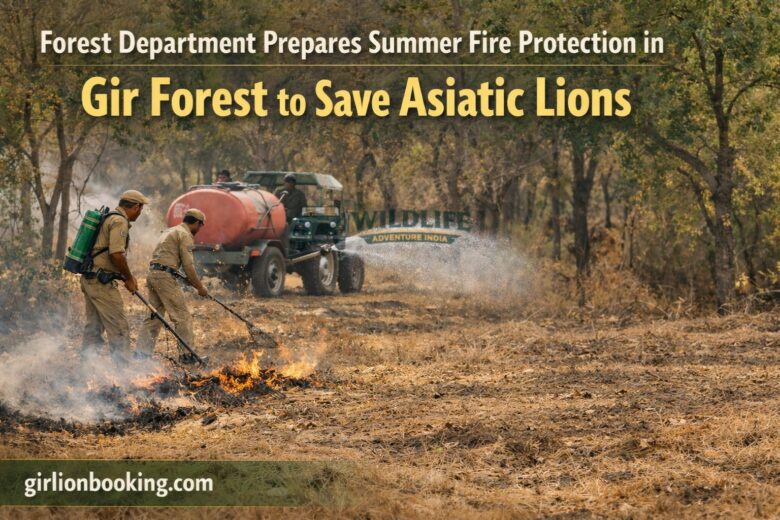
Every year, when summer begins in India, the temperature rises and forests become dry. Dry leaves, grass, and branches increase the risk of forest fires. Because of this danger, the Forest Department starts preparing early to protect wildlife and forest ecosystems.
One of the most important places where these preparations are taking place is Gir National Park. This famous forest is known around the world as the only natural home of the Asiatic lion.
To reduce wildfire risks and protect biodiversity, forest officials have started developing a “summer fire shield,” mainly by carving out fire lines throughout the forest. These fire lines help stop forest fires from spreading and protect the animals living in the forest.
In this article, we will explain in simple English how the Forest Department prepares Gir Forest for summer, how fire lines work, and why this effort is very important for the survival of the Asiatic lions.
Introduction to Gir Forest and Its Importance
The famous wildlife sanctuary Gir National Park lies in Gujarat, India. The forest covers a large area of dry deciduous woodland, grasslands, and rocky hills. It is one of the most important Asiatic lion reserve in India.
The forest is globally famous because it is the only natural habitat of the Asiatic lion. Asiatic Lion once lived across many parts of Asia, including the Middle East and India. However, due to hunting and habitat loss, their population declined greatly. Today, Gir Forest is the last safe home where these lions survive in the wild.
Because of this unique importance, protecting Gir Forest is extremely important for wildlife conservation.
The forest is also home to many other animals and birds.
Visitors to Gir can spot various species of wildlife, including:
● Leopard
● Chital Deer
● Sambar Deer
● Nilgai
● Striped Hyena
● Golden Jackal
● Indian Python
Gir National park has more than 300 species of birds and many reptiles and insects.
Because the forest supports such rich biodiversity, protecting it from natural dangers like wildfires is very important.
Why Forest Fires Are Dangerous in Summer
During the summer season, forests become very dry. Most trees lose their leaves and the ground becomes covered with dry grass and fallen branches.
These dry materials can easily catch fire.
Sometimes fires start naturally because of heat and friction. In other cases, they may start due to human activities like:
● Throwing burning cigarettes
● Campfires
● Burning agricultural waste
● Careless tourism activities
Once a fire starts in a dry forest, it can spread very quickly.
Forest fires can cause many serious problems.
- Threat to Wildlife
Animals living in the forest may not be able to escape quickly from fast-moving fires.
Young animals, birds, reptiles, and small mammals are especially vulnerable.
Predators like lions and leopards may survive, but their habitat can be damaged. - Loss of Vegetation
Forest fires destroy plants, trees, and grasslands.
This reduces food availability for herbivores such as deer and antelope. - Habitat Damage
Burning forests lose their shelter and nesting areas.
Birds and insects lose their habitats. - Soil Damage
Fires can damage soil nutrients and make the land less fertile for plant growth.
Because of these dangers, forest departments take special precautions before summer arrives.
Forest Department Starts Early Preparations
To prevent forest fires, the Forest Department begins preparation months before summer.
In Gir National Park, these preparations usually start between December and February.
This period is ideal because the weather is cooler and forest workers can safely carry out fire prevention work.
One of the main activities during this period is creating fire lines.
Deputy Conservator of Forests Prashant Tomar explained that fire line preparation is done every year as part of the forest fire prevention strategy.
The goal is to reduce the chances of large forest fires spreading across the forest.
What Are Fire Lines?
Fire lines are specially cleared strips of land inside forests.
These strips are created by removing dry grass, leaves, and branches.
Once cleared, these areas act as barriers that prevent fires from spreading.
If a wildfire reaches a fire line, it usually stops because there is no dry fuel left to burn.
In simple words, fire lines work like safety walls inside the forest.
They break the path of fire and protect large areas of vegetation and wildlife.
How Fire Lines Are Created
Creating fire lines is a careful and planned process.
Forest workers clear vegetation along both sides of important forest roads and pathways.
In Gir Forest, the cleared area usually covers around 15 meters on each side of the road.
This means a wide strip of land is kept free from dry materials.
The steps involved include:
Step 1: Clearing Dry Grass
Workers first remove dry grass and small plants.
These materials are the most common fuel for forest fires.
Step 2: Removing Fallen Leaves and Branches
Dead leaves and broken branches are also removed from the area.
This reduces the amount of material that can burn.
Step 3: Controlled Burning
After clearing the area, forest officials sometimes perform controlled burning.
Controlled burning means small fires are lit in a controlled way to burn remaining dry vegetation.
This process ensures that no flammable materials remain in the fire line area.
Controlled Burning – A Safe Fire Management Technique
Controlled burning may sound dangerous, but it is actually a very useful forest management method.
In this process, trained forest workers carefully burn dry vegetation under safe conditions. Before lighting any fire, officials check:
● Wind direction
● Wind speed
● Weather conditions
● Temperature levels
This ensures the fire remains small and under control.
The fire is only allowed to burn within the cleared area.
Forest staff remain present with fire-fighting equipment in case the flames start spreading.
Controlled burning reduces the risk of large and uncontrollable wildfires during summer.
Use of Modern Equipment in Fire Prevention
In the past, forest workers mostly used manual tools like sticks, spades, and water buckets.
Today, the Forest Department uses modern equipment to improve safety and efficiency.
Some of the advanced tools used include:
High-Tech Blowers
Powerful blowers are used to clear dry leaves and debris quickly.
These machines help workers clean large areas in a short time.
Fire-Fighting Kits
Special fire-fighting kits are available for emergency situations.
These kits include protective clothing, water sprayers, and safety gear.
Communication Devices
Wireless communication systems allow forest staff to stay connected with the control room.
This ensures quick response in case of any fire incident.
Using modern technology helps forest workers manage fires more effectively.
Continuous Monitoring of the Forest
During the fire prevention operations, forest officials constantly monitor the environment. Teams carefully observe:
● Weather conditions
● Wind speed
● Fire movement
● Safety of workers
If the wind becomes strong or changes direction, burning operations are stopped immediately.
This careful monitoring ensures that controlled fires do not become dangerous.
Forest staff also patrol the forest regularly during summer months.
Early detection of small fires helps prevent them from becoming large disasters.
Benefits of Fire Line Creation
Although fire lines are mainly created to stop wildfires, they provide many additional benefits for
the forest ecosystem.
Easier Wildlife Movement
When dense grass and bushes are cleared, animals can move more easily.
Large animals like lions and leopards prefer open areas for movement and hunting.
Fire lines create natural corridors for wildlife.
Reduction of Harmful Insects
Dry grass areas often contain pests like ticks and mites.
These insects can spread diseases among animals.
Controlled burning destroys these pests and improves animal health.
Healthier Vegetation Growth
After controlled burning, fresh grass grows during the monsoon season.
This new grass becomes food for herbivores like deer and antelope.
Better Forest Management
Fire lines help forest officials move easily during patrols and emergency situations.
They also make it easier to access remote areas of the forest.
Protection of the Asiatic Lion
The most important reason for protecting Gir Forest is the survival of the Asiatic lion.
Asiatic Lion is one of the rarest big cats in the world.
Unlike African lions, Asiatic lions live only in a small region of India.
Over the years, conservation efforts have helped increase their population.
Today, hundreds of lions live in and around Gir Forest.
However, forest fires could still pose a serious threat to their habitat.
If large areas of forest burn, lions may lose:
● Hunting grounds
● Shelter
● Water sources
By creating fire lines and preventing forest fires, the Forest Department ensures that lions
continue to live safely in their natural home.
Role of Forest Staff and Local Communities
Protecting a forest like Gir requires teamwork.
Forest guards, officers, and local communities all play important roles.
Forest guards patrol the forest daily to detect fires early.
Local villagers living near the forest also help by reporting smoke or unusual fire activity.
Community awareness programs are conducted to educate people about fire safety.
Tourists visiting the forest are also advised to follow strict rules.
Some important rules include:
● Do not throw cigarette butts
● Do not light fires inside the forest
● Do not leave plastic or waste behind
These simple precautions help reduce the chances of accidental forest fires.
Gir Forest – A Symbol of Successful Conservation
Over the past century, Gir Forest has become a global example of successful wildlife conservation.
The survival of the Asiatic lion is considered one of the greatest achievements in wildlife protection.
Strict forest management, community cooperation, and government support have helped protect this ecosystem.
Efforts such as fire line creation show how careful planning and preventive action can save forests from disaster.
Future Challenges and Continued Protection
Even with strong protection systems, forests still face challenges.
Climate change is increasing temperatures and making summers hotter and drier.
This raises the risk of forest fires in many regions.
Because of this, forest departments must continue improving fire prevention methods.
Some possible future improvements include:
● Satellite monitoring for early fire detection
● Drone surveillance in remote forest areas
● Faster emergency response teams
● Advanced fire-fighting vehicles
With the help of modern technology and strong conservation policies, forests like Gir can continue to thrive.
Conclusion
The Forest Department’s efforts to build a summer fire shield in Gir National Park demonstrate the importance of proactive forest management.
By creating fire lines, clearing dry vegetation, and using controlled burning techniques, officials are reducing the risk of dangerous forest fires.
These efforts not only protect the forest but also safeguard the incredible wildlife that lives there especially the rare Asiatic Lion.
The preparation work carried out before summer highlights the dedication of forest officials and conservationists who work tirelessly to protect one of India’s most valuable natural treasures.
With continued care and responsible management, Gir Forest will remain a safe and thriving home for lions and many other species for generations to come.