

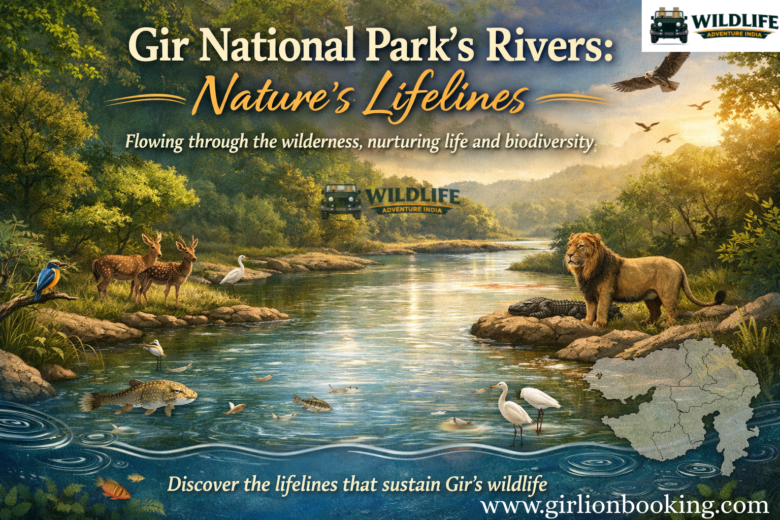
Gir National Park, situated in the western Indian state of Gujarat, is world-famous as the last sanctuary of the Asiatic lion (Panthera leo persica), the iconic predator that historically roamed the lands of India, Pakistan, and parts of the Middle East. While the park is celebrated for its lions, Gir is much more than a predator stronghold. Beneath its dry deciduous forests lies a complex, interdependent ecosystem that has evolved over centuries, sustained by a network of rivers, streams, and man-made reservoirs. These water bodies are not merely geographical features—they are the lifelines of Gir, shaping vegetation, sustaining herbivores, supporting apex predators, and even influencing the livelihoods of local communities.
Understanding Gir’s rivers is crucial to appreciating the delicate balance of this ecosystem, the survival strategies of its species, and the ongoing efforts to protect this unique habitat from ecological threats. Visitors interested in exploring this extraordinary park can book safaris and guided tours here.
The Seven Rivers of Gir: Veins of the Forest
Gir National Park and Sanctuary is nourished by seven perennial rivers, each playing a critical ecological role. Unlike seasonal streams that dry up after the monsoon, these rivers provide reliable water throughout the year, sustaining life during Gujarat’s long dry season.
The seven rivers of Gir are:
- Hiran
- Shetrunji
- Dhatarvadi (Datardi)
- Shingoda
- Machhundri
- Raval
- Ambajal
While each river contributes uniquely to Gir’s ecosystem, they collectively sustain grasslands, forest patches, and reservoirs across the park. Their waters nourish vegetation, maintain soil fertility, and provide corridors for animal movement. Some rivers maintain permanent watercourses that wildlife depend on year-round, while others feed reservoirs that support survival during dry months. This network allows Gir to sustain extraordinary biodiversity even in a region with harsh seasonal climatic variations. Visitors can plan their wildlife exploration and learn more about park tours here.
The Hiran River: The Heartbeat of Gir
Among all of Gir’s rivers, the Hiran River is often described as the park’s most vital lifeline. Originating near the Sasa Hills within the forest, the Hiran flows westward, carving a drainage basin approximately 40 kilometres long, with a catchment area of about 518 square kilometres (200 sq mi).
The Hiran is fed by several tributaries, including the Saraswati and Ambakhoi rivers, which converge near Talala town to form a robust, perennial water system. Its waters nourish the western reaches of Gir, where lush grasslands and forest patches attract a multitude of herbivores.
The Hiran River supports a dynamic food web:
Herbivores: Chital, sambar, nilgai, blackbuck, chinkara, and wild boar rely on riverine vegetation for food and shelter.
Predators: Asiatic lions, leopards, striped hyenas, jungle cats, desert cats, honey badgers, and mongooses use river corridors to hunt and move safely.
The river also benefits local human communities, supplying water for agriculture and livestock. This coexistence underscores the interconnectedness of humans and wildlife, a theme central to Gir’s conservation strategy.
Dams and Reservoirs: Managing Water in a Dry Landscape
Water management is critical in Gir, where long dry spells test wildlife resilience. Four of Gir’s rivers—Hiran, Machhundri, Raval, and Shingoda—have dams that create reservoirs, ensuring water availability during harsh summers.
Kamleshwar Dam
Constructed on the Hiran River, Kamleshwar Dam is often called the “Lifeline of Gir”. During summer months, when other water sources dry up, the reservoir attracts large congregations of wildlife, offering visitors prime opportunities to observe Asiatic lions, leopards, and herbivores gathering around watering holes.
Umrethi Dam
Also connected to the Hiran, the Umrethi Dam provides supplementary water to the surrounding grasslands and supports smaller water-dependent species.
These dams highlight the delicate balance between human intervention and natural processes. While they are crucial for maintaining water availability, they must be managed carefully to avoid disrupting sediment flow, aquatic ecosystems, and downstream vegetation. Tourists can book jeep safaris to see these water-dependent habitats.
Rivers as the Backbone of Biodiversity
Gir National Park may host only 38 mammalian species, but its overall biodiversity exceeds 2,300 species, including 300 species of birds, 37 species of reptiles, and countless insects. Rivers and reservoirs form the backbone of this ecological richness.
Predators:
- Asiatic lions: Use river-fed watering holes for hydration and hunting.
- Leopards and hyenas: Follow river corridors to move stealthily across the forest.
- Small carnivores: Jungle cats, desert cats, and honey badgers rely on river-adjacent habitats.
Herbivores:
Chital, sambar, nilgai, blackbuck, chinkara, wild boar, and four-horned antelope depend on riverine vegetation, which provides food and shelter during the dry season.
Reptiles and Amphibians:
Crocodiles, Indian cobras, monitor lizards, and tortoises rely on rivers for hydration, breeding, and hunting. Amphibians like frogs and toads thrive in moist riparian zones, forming a critical food base for other species.
Water availability profoundly affects feeding patterns, breeding cycles, and predator-prey dynamics, making rivers indispensable to Gir’s ecological balance.
Vegetation Shaped by Water
Gir’s dry deciduous forests are home to over 500 plant species, including teak, banyan, acacia, and other native flora. Rivers provide:
- Shady corridors for animals and birds
- Enriched soils via seasonal flooding
- Grasslands and scrub forests that regenerate naturally
These vegetative zones form the foundation of the ecosystem, sustaining herbivores, providing hunting grounds for predators, and supporting smaller species like insects, amphibians, and microfauna that form the base of the food chain.
Threats to Gir’s Rivers
Despite protection, Gir’s rivers face numerous threats:
Natural Risks:
- Cyclones and heavy rainfall are causing floods
- Forest fires are reducing riparian vegetation
- Droughts are lowering water levels
Human-Induced Pressures:
- Overgrazing by livestock
- Tourism-related disturbances, including noise and littering
- Mining activities near river catchments
- Vehicle traffic disrupts wildlife
- Pollution from railway lines and nearby settlements
These threats degrade water quality, disrupt soil fertility, and can alter wildlife behaviour. Protecting rivers requires a holistic approach, balancing conservation, human development, and climate resilience. Visitors can learn more about the park’s conservation policies.
Rivers and Human Settlements
Rivers not only sustain wildlife—they are vital to communities near Gir. Agriculture, drinking water, and livestock all rely on perennial rivers. However, shared resources can lead to human-wildlife conflicts, especially during droughts.
Sustainable strategies include:
- Controlled grazing to prevent overuse of vegetation
- Regulated water usage for farming and domestic purposes
- Eco-friendly tourism that minimises ecological impact
- Community awareness programmes to foster coexistence
Through careful management, rivers can continue to support both wildlife and human livelihoods, reinforcing Gir as a model for integrated conservation.
The Lifeline of the Asiatic Lion
For the Asiatic lion, rivers are more than water sources—they are lifelines that maintain entire ecosystems. They provide:
- Hydration to sustain life
- Prey-rich grasslands to ensure hunting success
- Movement corridors for dispersal and territory establishment
The Hiran River, in particular, acts as a natural highway for wildlife, connecting habitats and linking populations. Protecting rivers ensures lions thrive without isolation, starvation, or conflict with humans.
Conservation Lessons from Gir’s Rivers
Gir’s rivers highlight broader conservation strategies:
- Water as a keystone resource: Sustains multiple trophic levels, from plants to apex predators.
- Interconnected habitats: Species conservation depends on healthy vegetation and water systems.
- Human-wildlife coexistence: Communities must collaborate with authorities to protect shared resources.
- Long-term monitoring: Ongoing research is needed to track climate change impacts, seasonal variability, and human encroachment.
Conserving rivers is as critical as protecting wildlife, since water scarcity directly affects species survival, ecosystem resilience, and biodiversity.
Gir National Park’s Rivers: Nature’s Lifelines
Conclusion
Gir National Park is more than the last refuge of the Asiatic lion—it is a living ecological tapestry, woven together by its rivers. From the Hiran to the Ambajal, these waterways nourish grasslands, sustain vegetation, and provide critical corridors for predators and prey alike.
Despite natural challenges like droughts and human pressures such as overgrazing and pollution, Gir’s rivers continue to support one of the world’s most iconic ecosystems. Protecting these rivers is synonymous with protecting the future of the Asiatic lion and the countless species that share its habitat.
The lifeblood of Gir flows visibly in watering holes and streams and invisibly in the survival instincts of every creature that depends on it. The rivers are the threads that hold Gir together—a testament to the resilience and interconnectedness of nature.