

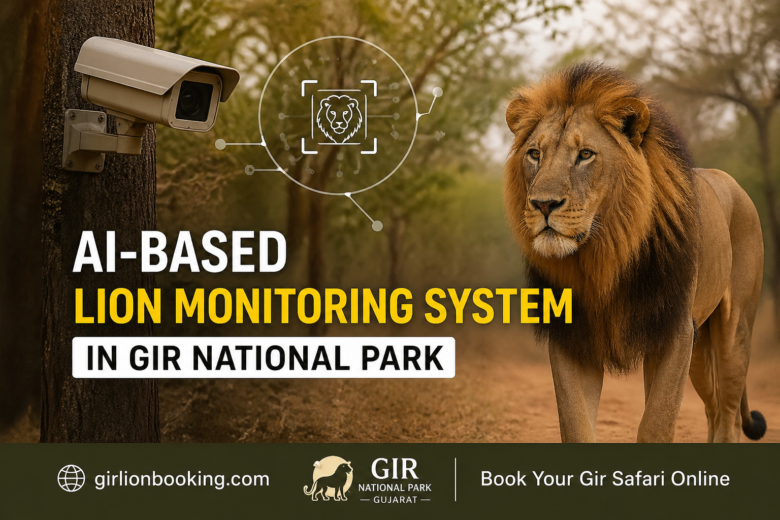
India is taking a major step towards smart wildlife conservation as an AI-based lion monitoring system in Gir National Park has been officially sanctioned. This initiative, announced in Parliament by Railway Minister Ashwini Vaishnaw, aims to improve the safety of Asiatic lions while ensuring smooth railway operations through the forest region.
Moreover, Gir National Park in Gujarat is the only natural habitat of the Asiatic lion, which makes its protection a top priority. With increasing human activity and railway movement in the region, the introduction of advanced AI technology marks a new era in wildlife protection.
AI-Based Lion Monitoring System
To begin with, the government has approved an Artificial Intelligence-based Intrusion Detection System (IDS) to track lion movement along railway tracks. Specifically, this smart system will be deployed across a 115 km railway stretch between Damnagar and Pipavav in the Bhavnagar Division of Western Railway.
The main goal of this system is to:
- Detect lion movement near railway tracks
- Send real-time alerts to railway staff
- Prevent accidents involving lions and trains
As a result, this AI lion tracking system in Gir National Park will act as an early warning mechanism, helping authorities take quick action and avoid potential wildlife collisions.
How the AI System Works
In simple terms, the AI-based intrusion detection system uses sensors, cameras, and intelligent algorithms to monitor wildlife activity near railway tracks.
Once a lion is detected, the system acts immediately:
- Firstly, alerts are immediately sent to loco pilots, station masters, and control rooms
- Then, trains can slow down or stop if needed
- Consequently, preventive steps are taken to ensure animal safety
This technology ensures real-time monitoring of lion movement, making it far more efficient than traditional methods.
Existing Safety Measures in Gir Forest Railway Section
Before the implementation of AI, several steps were already in place to protect wildlife in Gir:
- Speed restrictions for trains in lion movement corridors
- Two existing lion underpasses for safe crossing
- Five additional underpasses under construction
These measures have helped reduce risks, but the addition of AI wildlife monitoring in India will significantly enhance protection.
Railways and Forest Department Coordination
To ensure smooth implementation and monitoring, multiple coordination committees have been formed:
- Circle-level committee (quarterly meetings)
- Divisional-level committee (bi-monthly meetings)
- Range-level committee (monthly meetings)
These committees help resolve issues quickly and ensure Continuous protection of lions in Gir National Park.
Why This Initiative Matters
The introduction of an AI-based lion monitoring system in Gir National Park is important for several reasons:
- Protects the endangered Asiatic lion population
- Reduces human-wildlife conflict
- Prevents train-related wildlife accidents
- Promotes technology-driven conservation in India
This move also sets an example for other wildlife reserves across the country to adopt smart conservation solutions.
Future of Wildlife Conservation in India
Looking ahead, the use of AI, India is moving towards modern, data-driven wildlife management. If successful, similar systems can be implemented in other national parks for tracking tigers, elephants, and other animals. Gir National Park’s initiative shows how technology and conservation can work together to protect wildlife without hindering development.
Conclusion
The approval of the AI lion tracking system in Gir National Park is a landmark step in safeguarding India’s iconic Asiatic lions. By combining technology, infrastructure, and coordination, this initiative promises a safer future for wildlife in one of India’s most important ecosystems. For travelers, it also means a better and safer safari experience when planning their Gir National Park safari booking.