
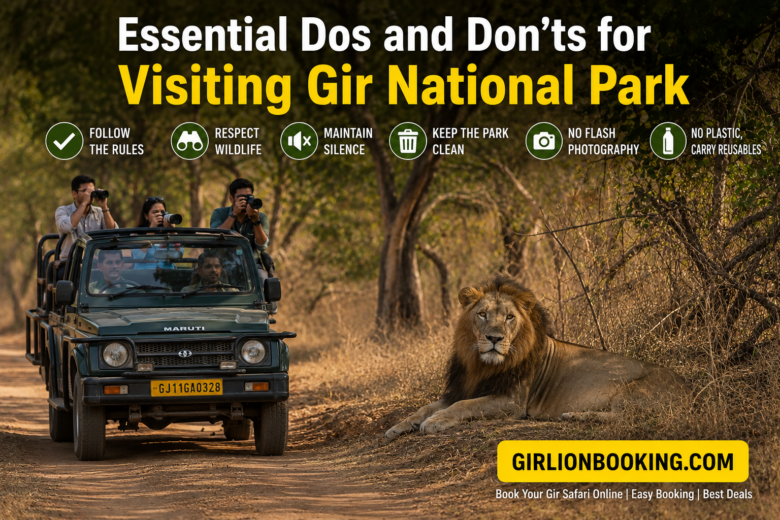
Gir National Park is one of those rare places on earth where nature still holds its ground. Tucked in the Talala Gir region of Gujarat, it is the last wild home of the Asiatic lion, a crown jewel of Indian wildlife. Whether you are a first-time visitor or returning for another lion sighting, knowing the rules before you enter the forest makes all the difference between a smooth, memorable experience and an awkward, rule-breaking one.
This guide covers everything you need to know what to do, what to absolutely avoid, and a few practical tips that will make your Gir lion safari booking worth every rupee.
Before You Even Enter the Park
Gir National Park operates on a strict permit system. Safari seats fill up fast, especially between December and March which is peak season. It is strongly advised to book your safari at least 45 days in advance. You can confirm your Gir National Park safari booking online through platforms like girlionbooking.com, which offers Gir Gypsy Safari, Devalia Safari Park, and Kankai Temple Safari all in one place at affordable packages.
Do: Book your safari online well ahead of your travel dates. The park limits the number of vehicles entering each zone daily, so availability is genuinely tight.
Do: Carry a valid photo ID for every member of your group. Entry without identification is not permitted.
Do: Arrive at the gate on time. Safari slots are non-flexible, and missing your slot means forfeiting your permit.
Don’t: Try to enter the park without a permit. There are no walk-in options, and trespassing into forest zones is a punishable offence under Indian wildlife law.
What to Wear and What to Pack
The forest does not care about fashion, but it does punish the unprepared.
Do: Wear light-coloured, breathable cotton clothing in earthy or neutral shades — grey, olive, beige, or khaki. These tones blend into the environment and are less likely to startle animals.
Do: Cover your arms and legs. This protects you from insect bites, thorny shrubs, and the sun.
Do: Carry a good pair of binoculars. Lions often rest quietly in grasslands or beneath shady trees, and a good pair of binoculars can help you spot them from afar instead of missing them completely.
Do: Bring enough drinking water in a stainless steel bottle. Plastic bottles and single-use plastic are strictly prohibited inside the park. This is not a suggestion, it is a rule enforced at the gates.
Do: Pack sunscreen, a hat or cap, insect repellent, and your camera with flash turned off.
Don’t: Wear bright reds, yellows, or neon colours. Loud visual signals disturb wildlife and draw unnecessary attention.Don’t: Spray strong perfumes or colognes before the safari. Scent carries far in the forest and can alert animals, disrupting natural behaviour.
Behaviour Inside the Park
The moment you cross the gates of Sasan Gir, you are in the animals’ home. Every rule inside the park exists to protect them, not inconvenience you.
Do: Maintain complete silence throughout the safari. Sound travels quickly through dry deciduous forest. Alarm calls from deer and langurs are actually useful; they often signal a lion nearby but only if you are quiet enough to hear them.
Do: Follow your guide’s instructions without question. Licensed guides at Gir are trained by the forest department. They know the zones, the animals, and the safe distance to maintain.
Do: Stay inside the vehicle at all times. Alighting from a safari jeep is strictly prohibited unless your guide explicitly permits it in a designated area.
Do: Keep your mobile camera flash off. Flash photography disturbs wildlife and can provoke unpredictable reactions, especially from big cats.
Do: Respect all other wildlife beyond the lion. Gir National Park is home to leopards, hyenas, jungle cats, crocodiles, over 300 bird species, sambar, chinkara, and much more. The safari is a full ecological experience not just a lion hunt.
Don’t: Honk or make loud noises from the vehicle. Honking is prohibited inside the park.
Don’t: Try to feed, tease, or get close to any animal. Even seemingly calm herbivores can be dangerous if provoked.
Don’t: Ask your driver to violate the designated route. Safari gypsy are assigned specific routes and must stay within them. Pressuring the driver to go off-track puts both you and the wildlife at risk and can result in your guide losing their licence.
Don’t: Play music or use any musical instrument inside the park. Gir is a strict silent zone.
Don’t: Carry or consume alcohol and tobacco inside the park. Smoking and liquor are completely prohibited. Weapons or explosives of any kind are also banned. This one should go without saying.
Don’t: Litter. Not a single wrapper, tissue, or bottle. Carry a bag and take all your waste out with you.
Photography and Cultural Respect
Do: Capture as much as you want without flash. Early morning safaris during golden hour produce the most stunning wildlife photographs.
Don’t: Photograph local tribal communities or Maldhari villagers living in the buffer zones without their explicit consent. Their privacy and dignity matter.
Choosing the Right Safari for Your Visit
Gir offers three distinct experiences, each suited to a different kind of visitor.
The main Gir Gypsy Safari takes you deep into the core jungle zone in an open jeep; this is the classic Asiatic lion sighting experience. It is ideal for wildlife enthusiasts who want to spend time tracking animals in their natural environment.
The Devalia Safari Park, also called the Gir Interpretation Zone, is a fenced, 412-hectare area about 18 kilometres from Sasan Gir. It guarantees sightings of lions and other animals in a more controlled setting. It is a great choice for families with young children or travellers with limited time.
The Kankai Temple Safari is a unique combination of wildlife and spirituality. Located inside the heart of Gir Forest, it allows visitors to observe wildlife while also visiting the ancient temple of Kankeshwari Mataji, a revered site for the pastoral Maldhari community.
Frequently Asked Questions
December to April. Weather is pleasant, vegetation is thinner, and animals gather near water — making lion sightings much easier.
At least 45 days ahead. Peak season slots, especially weekends, fill up extremely fast.
Yes, but always keep your flash off. It disturbs wildlife and is strictly against park rules.
No. Stay inside at all times unless your guide specifically tells you it is safe to step out.
No. All plastic is banned. Carry water in a stainless steel or copper bottle.
Don’t worry. Gir has 600+ wildlife species. Leopards, crocodiles, deer, and rare birds make every safari worthwhile.
Devalia guarantees sightings in a fenced zone great for quick visits. The main safari is wilder and more immersive. Choose based on your time and expectations.
Final Word
Gir is not just a national park. It is the reason the Asiatic lion still exists. Every rule, every regulation, every restriction inside the forest exists to keep this fragile ecosystem alive for the animals that live there and for the generations of visitors yet to come.
Respect the forest. Follow your guide. Stay patient. And if you get lucky enough to lock eyes with a lion in the golden morning light that moment will be worth every rule you followed to get there.