

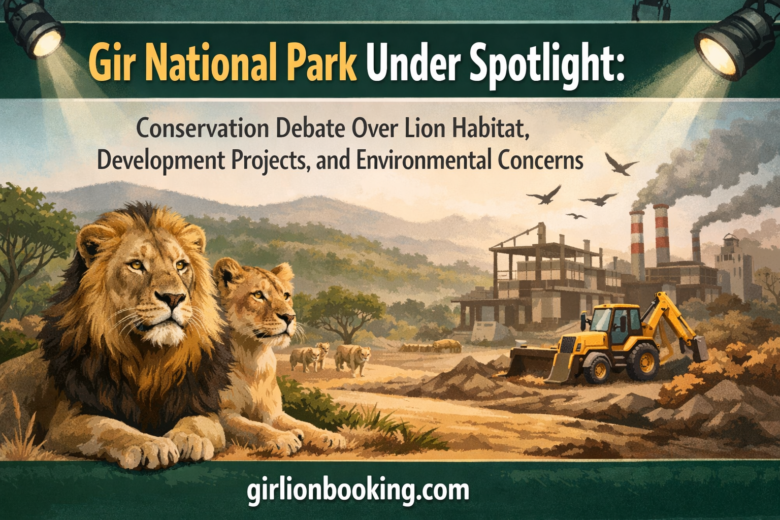
Gir National Park and the surrounding forest landscape hold a unique place in global wildlife conservation as the only natural habitat of the Asiatic Lion. Over the years, Gujarat’s wildlife conservation initiatives have helped increase the lion population, making Gir a symbol of successful wildlife protection. However, recent concerns raised by wildlife experts and environmental activists have triggered a fresh discussion about the future management of this ecologically sensitive region.
A group of conservationists, former members of the Gujarat State Board for Wildlife, and environmental advocates have submitted representations to senior government authorities, including the Prime Minister’s Office and the Gujarat Chief Minister’s Office. They have requested a detailed review of several decisions and activities taking place in and around the Gir landscape, citing potential implications for wildlife conservation and habitat protection.
The developments have sparked renewed discussions about the future of Asiatic lion conservation, highlighting the importance of protecting Gir’s fragile ecosystem while ensuring sustainable growth and responsible tourism.
Why Gir National Park Is Important for Wildlife Conservation
Gir National Park is far more than a wildlife tourism destination. It is one of India’s most valuable ecological regions and serves as the last remaining natural home of the Asiatic Lion. The landscape also supports a rich diversity of wildlife, including leopards, striped hyenas, jackals, crocodiles, deer species, antelope, and numerous migratory and resident birds.
The ecological importance of Gir extends beyond the boundaries of the national park and wildlife sanctuary. Surrounding forest areas and wildlife corridors play a crucial role in supporting animal movement, breeding patterns, and habitat connectivity.
Protecting these interconnected ecosystems is considered essential for maintaining the long-term health of wildlife populations across the region.
Conservationists Raise Concerns Over Recent Developments
Environmental groups and wildlife experts have expressed concerns regarding several developments within the Gir National Park landscape. According to representations submitted to government authorities, certain projects and approvals require careful examination to ensure compliance with wildlife conservation objectives and environmental regulations.
Experts emphasize that successful Asiatic lion conservation depends not only on safeguarding protected forests but also on preserving surrounding habitats that support ecological balance and wildlife movement.
Issue 1: Proposed Mining Activity in Babarkot Reserve Forest
One of the major concerns highlighted by conservation groups relates to a proposed mining project in the Babarkot Reserve Forest area of the Gir landscape.
Environmental advocates argue that the proposed diversion of forest land could impact thousands of trees and affect an area known to support wildlife movement. The region is believed to function as an important corridor used by lions and other species moving between forest habitats.
Wildlife specialists note that habitat corridors are critical for maintaining healthy animal populations. These routes allow wildlife to access resources, expand territories, and reduce pressure on core habitats.
Conservation groups have called for comprehensive environmental assessments before any activity that could alter such ecologically sensitive areas.
Issue 2: Settlement Permissions and Community Concerns
Another concern raised by conservationists relates to settlement-related approvals within the Gir landscape, with experts emphasizing the need to carefully assess their potential impact on wildlife habitats and long-term conservation efforts.
Environmental groups have questioned whether certain approvals align with established conservation policies and habitat management objectives. At the same time, some members of the Maldhari community have expressed concerns regarding transparency and equal treatment in administrative decisions.
The Maldharis have lived alongside Gir’s wildlife for generations and remain an important part of the region’s cultural heritage. Balancing community welfare, traditional rights, and wildlife conservation continues to be a complex aspect of forest management.
Experts believe that transparent consultation and scientifically informed decision-making can help address both conservation priorities and community concerns.
Issue 3: Resort Development Near Forest Areas
Tourism plays a significant role in the economy surrounding Gir National Park. Thousands of visitors travel to the region each year to enjoy a Gir jungle Safari and witness the majestic Asiatic Lion in its natural habitat.
However, concerns have been raised regarding tourism-related infrastructure and commercial developments located near protected forest zones.
Environmental experts stress that tourism growth should be carefully planned to avoid habitat fragmentation, excessive human disturbance, and ecological degradation.
Sustainable tourism practices are considered essential for ensuring that economic benefits do not come at the expense of wildlife conservation. Conservationists advocate strict compliance with environmental regulations for all tourism projects operating near sensitive habitats.
Issue 4: Rising Attention on Lion Mortality
Another important issue highlighted by wildlife advocates involves reports of lion deaths in and around the Gir National Park ecosystem.
Gir National Park Conservation experts have called for detailed scientific evaluation of mortality patterns and potential factors that may affect the health and survival of the lion population.
Because the Asiatic Lion exists naturally only within this region, every individual plays a significant role in the species’ future. Continuous monitoring of habitat conditions, disease risks, and human-wildlife interactions remains essential for effective conservation.
Experts believe that transparent reporting and ongoing research can help strengthen wildlife management strategies and improve conservation outcomes.
Understanding the Gir National Park Conservation Framework
Wildlife experts point out that Gir’s management is guided by established conservation plans designed to protect habitats, wildlife populations, and ecological processes.
These frameworks provide direction on land use, habitat restoration, tourism management, and development activities within the broader landscape.
Conservation advocates emphasize that all projects and approvals affecting the region should be evaluated carefully to ensure consistency with environmental laws and conservation objectives.
Effective implementation of these policies is considered vital for preserving Gir’s ecological integrity.
Finding a Balance Between Development and Gir National Park Conservation
The ongoing discussion reflects a challenge faced by protected areas across the world—how to balance economic development with environmental sustainability.
Tourism, infrastructure projects, and local livelihoods contribute significantly to regional growth. However, conservation experts stress that development must be planned responsibly to minimize impacts on wildlife habitats and ecological systems.
Given Gir’s global importance as the only natural habitat of the Asiatic Lion, sustainable planning remains a key priority.
Experts suggest that transparent governance, scientific assessments, community participation, and strict environmental compliance can help create a balanced approach that supports both conservation and development goals.
What Could Happen Next?
With the matter now receiving attention from senior government authorities, there is growing interest in whether additional reviews, investigations, or assessments will be undertaken.
Wildlife experts and environmental groups continue to advocate for transparency and independent evaluation of decisions affecting ecologically sensitive areas within the Gir landscape.
Regardless of future actions, the debate has reinforced the importance of protecting one of the world’s most remarkable wildlife conservation regions.
Conclusion
Gir National Park stands as one of India’s greatest wildlife conservation achievements and remains the lifeline of the Asiatic Lion. Protecting this unique ecosystem requires safeguarding not only the core forest areas but also the surrounding habitats that support wildlife movement and ecological stability.
The ongoing discussions surrounding mining proposals, tourism infrastructure, settlement permissions, and lion conservation highlight the need for careful planning, scientific evaluation, and responsible governance.
As Gir National Park continues to attract wildlife enthusiasts, researchers, and tourists from across the globe, ensuring the long-term protection of its biodiversity will remain essential for future generations.