

Introduction
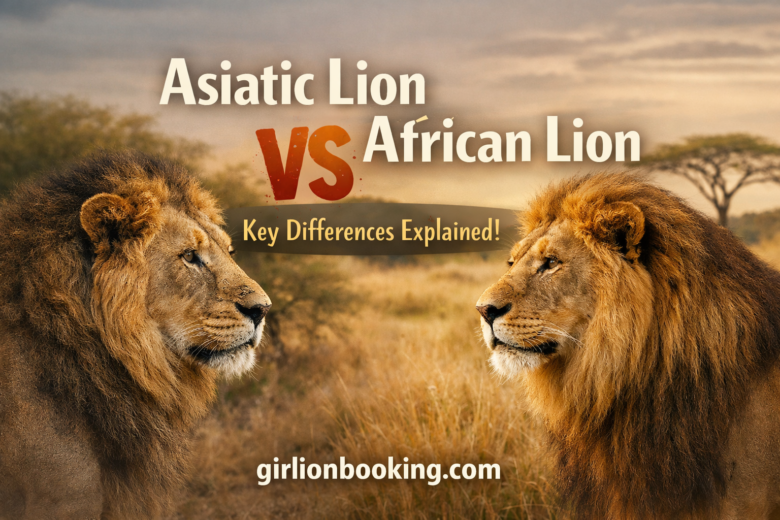
Lions are among the most iconic and admired animals in the world. Known as the “King of the Jungle,” lions symbolize strength, courage, and dominance. While many people are familiar with lions from documentaries and wildlife safaris, few realise that there are two distinct lion populations: the Asiatic Lion and the African Lion.
The Asiatic Lion is found exclusively in Gir National Park, Gujarat, India, while African Lions roam across various countries in Africa. Although they belong to the same species, these magnificent big cats differ in appearance, habitat, behaviour, and conservation status.
In this guide, we compare the Asiatic Lion vs African Lion and explore the key differences that make each unique.
About Asiatic Lion vs African Lion
The Asiatic Lion once roamed across the Middle East and large parts of Asia. However, due to hunting and habitat loss, their population declined dramatically. Today, the only wild population survives in Gir National Park.
African Lions, on the other hand, are distributed across several African countries and inhabit grasslands, savannas, and open woodlands.
Despite their common ancestry, years of geographical separation have resulted in noticeable differences between the two populations.
1. Physical Appearance of Asiatic Lion vs African Lion
Asiatic Lion:
The Asiatic Lion has a slightly smaller build compared to its African counterpart. One of its most recognizable features is the prominent fold of skin running along its belly.
Male Asiatic Lions generally have shorter and less dense manes. Their ears are often visible through the mane, making them easier to identify.
African Lion:
African Lions are usually larger and more muscular. Male lions possess thick, fuller manes that often cover the head, neck, and shoulders.
In many African populations, the main can be dark brown or even black, giving the lion a more imposing appearance.
Winner in Size:
African Lions are generally larger and heavier than Asiatic Lions.
2. Habitat and Distribution
Asiatic Lion Habitat:
The Asiatic Lion is found only in the Gir Forest ecosystem of Gujarat, India. The region consists of dry deciduous forests, grasslands, and scrublands.
Because of this limited range, the Asiatic Lion is considered one of the world’s most geographically restricted big cats.
African Lion Habitat:
African Lions occupy a much larger territory across Africa. They thrive in savannas, grasslands, woodlands, and semi-arid regions.
Countries such as Kenya, Tanzania, Botswana, South Africa, and Zimbabwe are famous for lion sightings.
Key Difference of Asiatic Lion vs African Lion
Asiatic Lions live in forests and scrub habitats, while African Lions primarily inhabit open savannas and grasslands.
3. Population Numbers of Asiatic Lion vs African Lion
Asiatic Lion Population:
Thanks to decades of conservation efforts, the Asiatic Lion population has increased significantly in recent years. However, all wild individuals still exist within a relatively small geographical area in Gujarat.
African Lion Population:
African Lions are more widespread but face threats from habitat loss, human-wildlife conflict, and poaching. Several African lion populations have declined over the past few decades.
Conservation Perspective:
Although African Lions are more numerous overall, the Asiatic Lion remains more vulnerable because its population is concentrated in a single region.
4. Social Behaviour of Asiatic Lion vs African Lion
Both Asiatic and African Lions are social animals that live in groups known as prides.
Asiatic Lions:
Asiatic Lion prides are generally smaller. Females often form smaller family groups, and males may spend more time alone or in small coalitions.
African Lions:
African Lions typically live in larger prides consisting of multiple females, cubs, and dominant males.
The open nature of African habitats encourages larger social groups.
5. Hunting Patterns of Asiatic Lion vs African Lion
Asiatic Lions:
Asiatic Lions often hunt deer, antelope, wild boar, and livestock near forested areas.
The dense vegetation of Gir Forest requires stealth and patience during hunts.
African Lions:
African Lions prey on zebras, wildebeests, buffaloes, antelopes, and other large herbivores.
Their hunting strategies often involve teamwork and coordinated attacks in open grasslands.
6. Mane Characteristics of Asiatic Lion vs African Lion
One of the easiest ways to distinguish the two lions is by their mane.
Asiatic Lion Mane:
- Shorter and less dense
- Ears remain visible
- Face appears more prominent
African Lion Mane:
- Thick and extensive
- Covers neck and shoulders
- Often darker in colour
Wildlife enthusiasts often use mane appearance as a quick identification tool.
7. Conservation Status of Asiatic Lion vs African Lion
Asiatic Lion Conservation:
The survival of the Asiatic Lion is considered one of India’s greatest wildlife conservation success stories. Strict protection measures in Gir National Park have helped revive the population from near extinction.
African Lion Conservation:
African Lions continue to face significant conservation challenges. Habitat fragmentation, illegal hunting, and human conflict remain major threats.
Conservation organizations across Africa are working to secure lion populations through protected reserves and community-based programs.
Why Gir National Park Is Special
Gir National Park is the only place on Earth where visitors can see wild Asiatic Lions in their natural habitat. This unique distinction makes Gir one of India’s most important wildlife destinations.
A Gir Safari Booking offers visitors the rare opportunity to observe these majestic predators alongside leopards, deer, hyenas, crocodiles, and hundreds of bird species.
For wildlife lovers, visiting Gir is more than just a safari—it is a chance to witness a remarkable conservation success story.
Also Read: Why Gir Is the Last Home of the Asiatic Lion
Conclusion
The debate between the Asiatic Lion vs African Lion is fascinating because both represent incredible examples of nature’s adaptability. While African Lions dominate the vast savannas of Africa, Asiatic Lions thrive in the forests of Gujarat’s Gir National Park.